Moderate

Tiny Homes in Pittsburgh, Pennsylvania

Pittsburgh tiny home guide: up to two ADUs per lot under the 2022 zoning update, $550–$1,100 permits, and THOW parking in surrounding RV parks.

Last researched May 2026

6
Builders serving area
302,971
Population
Moderate
Tiny-home friendliness

Why Pittsburgh

Pittsburgh offers tiny home residents a mid-size city lifestyle with strong neighborhood identity, affordable cost of living (notably lower than Philadelphia and East Coast peers), and a robust network of parks and riverfront trails. The 2022 ADU reforms have opened backyard cottage and garage-conversion pathways for homeowners in single-family districts. THOW owners typically settle in RV parks in the outer counties and commute in. Climate is humid continental with cold, snowy winters (average January low 22°F) and warm summers — tiny home builds should prioritize insulation and freeze-protected plumbing.

Tiny home living in Pittsburgh, Pennsylvania

Zoning & Placement

Pittsburgh updated its zoning code in 2022 to streamline accessory dwelling unit permits, allowing up to two ADUs per single-family zoning lot. Under the current code, an ADU is defined as a dwelling unit smaller than 800 square feet that is accessory to a legally established single dwelling. ADUs may be interior conversions, detached structures, or units within existing accessory structures (e.g., garage conversions). The city follows the Pennsylvania Uniform Construction Code (2018 IRC), which requires at least one habitable room of 120 square feet and any additional rooms of 70+ square feet. A 2018 Garfield ADU overlay pilot informed the 2022 reforms, and Mayor Gainey has proposed further expansions to raise the ADU cap to 1,000 square feet as part of the 2022 Housing Needs Assessment response. Allegheny County sets a 400 sq ft habitable minimum overall. THOWs are allowed only in licensed RV parks, not on standard residential lots within city limits. As of April 2026, Pittsburgh is among the more ADU-friendly large cities in Pennsylvania.

Verify current requirements with your local planning department.

What to verify locally

  • Confirm whether your tiny home will be treated as an ADU, a site-built dwelling, or a recreational vehicle.
  • Ask about utility hookup requirements, especially sewer, electrical service, and emergency-access setbacks.
  • Check whether long-term occupancy is allowed on the lot type you are considering.
  • Verify minimum square footage requirements for your zone classification.

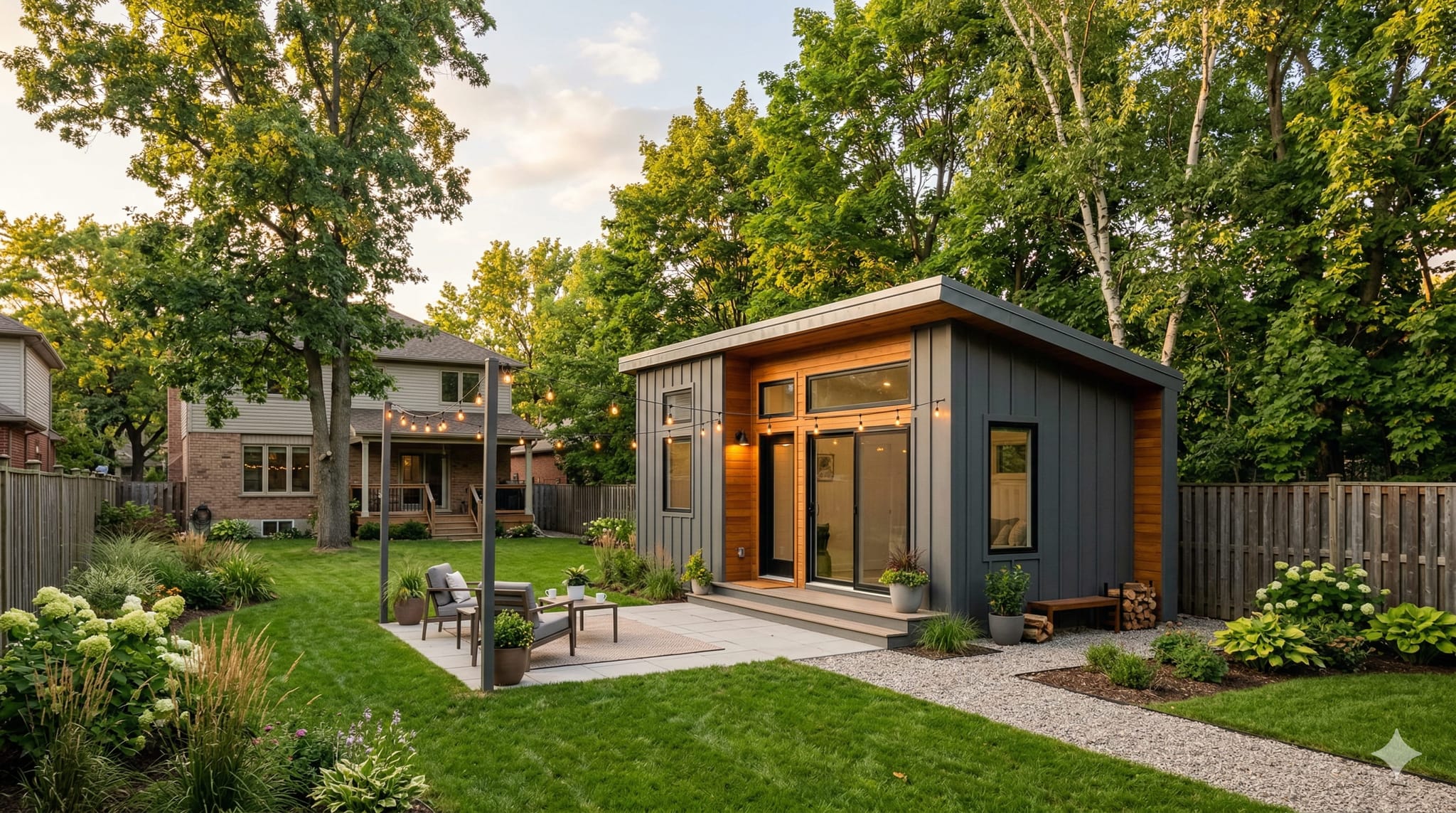
ADU & Backyard Tiny Homes

Pittsburgh permits up to two accessory dwelling units per single-family zoned lot, each capped at 800 square feet under current code. Permit fees run $550–$1,100 through the city planning portal, covering plan review and construction inspections. ADUs must meet PA UCC (2018 IRC) standards, including minimum room sizes and egress. Detached ADUs must meet setback requirements from primary dwellings and property lines. Utility connections to city water and sewer are required. Approval timeline typically runs 6–12 weeks for by-right projects; variance requests route through the Zoning Board of Adjustment.

Where to Park

Communities, RV parks, and parking options in and near Pittsburgh.

THOWs are not permitted as permanent dwellings on standard residential lots within Pittsburgh. Allegheny County allows THOWs in licensed RV parks, subject to the park's long-term occupancy rules. Several RV parks in surrounding Westmoreland, Washington, and Butler counties accept long-term THOW residents at monthly rates of $400–$600, generally including water, sewer, and electric. THOWs must be titled and registered with PennDOT as recreational vehicles under Act 134 of 2018.

rv-park

Pittsburgh Roaring Run RV Resort

THOW OK

194 Tannery Rd, Champion, PA (Laurel Highlands, ~60 mi SE of Pittsburgh)

Year-round RV resort with 200+ full-hookup sites offering nightly, weekly, monthly, and seasonal stays. Markets itself as the long-term RV destination for the Pittsburgh region with extended-stay packages.

Builders Serving Pennsylvania

Browse all builders

Beracah Homes

Greenwood, Delaware

Delaware's only factory-based off-site stick-built modular home builder, operating from a facility in Greenwood since 2003. Builds single-family cottages, small homes, ADUs, duplexes, and townhouses — with small-footprint designs starting around 400 sq ft — for clients in Delaware, Maryland, and parts of Virginia, Pennsylvania, and New Jersey.

Prefab / modular Foundation builds ADU

Service areas: Delaware, Maryland, Virginia, Pennsylvania, New Jersey

BrightBuilt Home

Portland, Maine

Portland, Maine design-build firm launched in 2013 by Kaplan Thompson Architects, offering net-zero-ready prefab and modular homes. Four purpose-built ADU designs (Torrey, Highland, Sterling, and Jordan) start around 420 sq ft and suit backyard placements. Typical turnkey cost runs $450–$600 per sq ft. Serves all of New England, the Mid-Atlantic, and as far west as Ohio through manufacturing partners in Maine, New Hampshire, and Pennsylvania.

Prefab / modular ADU Foundation builds

Service areas: Maine, New Hampshire, Vermont, Massachusetts, Connecticut, Rhode Island, New York, New Jersey, Pennsylvania, Ohio

Buckhorn Showcase

Berlin, Ohio

Amish-built modular home and tiny home builder based in Ohio’s Amish Country, constructing modules indoors at its Berlin, Ohio facility. Offers compact tiny homes and park models alongside larger modular log and custom home plans, with stated service coverage across Ohio, western Pennsylvania, and northern West Virginia (as of May 2026).

Park models Prefab / modular Custom builds

Service areas: Ohio, Pennsylvania, West Virginia

Comak Tiny Homes

Gordonville, Pennsylvania

Lancaster County tiny house builder based in Gordonville, Pennsylvania. Comak Tiny Homes designs and builds small living spaces, offers shop tours and design consultations, and maintains model and pricing pages for buyers exploring custom tiny homes. Its site listed a Terrace model for sale at $106,000 as of May 2026.

THOW Custom builds

Service areas: Pennsylvania

DC Structures

Damascus, Oregon

Oregon-based pre-engineered building kit manufacturer offering prefab cabin kits (including the 495 sq ft Mazama model) and backyard ADU kits shipped nationwide. Founded in 2002 alongside sister company DC Builders; maintains Delaware-specific design and pricing resources for cabin and ADU projects.

Prefab / modular ADU

Service areas: Delaware, Maryland, Virginia, Pennsylvania, New Jersey, New York, Oregon

Lancaster Log Cabins

Gap, Pennsylvania

Gap, Pennsylvania manufacturer of real-log park model cabins that ships throughout the contiguous United States. Founded in 2016, Lancaster Log Cabins builds portable park model homes using solid real-log timber walls, solid wood floors, doors, and cabinets. Models are designed for campgrounds, resorts, short-term rentals, hunting camps, getaway cabins, and tiny-home use. All cabins are classified as park model RVs, with Pennsylvania buyers able to work directly with the Gap shop and display location.

Park models

Service areas: Pennsylvania, Nebraska, Nationwide
Costs

A comparison between tiny-home living and conventional homeownership in Pittsburgh.

Tiny home path

Estimated monthly total

Traditional home path

Median home price 240000
Estimated monthly total $1,800-$2,300/mo mortgage + taxes + utilities

Potential monthly savings

Resources

Verified links for planning, permitting, and community connections in Pittsburgh.

Common Questions

How many ADUs can I build on my Pittsburgh lot?

Under the 2022 zoning update, Pittsburgh allows up to two accessory dwelling units per single-family zoned lot, each capped at 800 square feet. Permits run $550–$1,100 through the city planning portal.

Can I live in a tiny home on wheels in Pittsburgh?

Not on a standard residential lot. THOWs are classified as recreational vehicles under Pennsylvania law. Full-time THOW living in the Pittsburgh area is restricted to licensed RV parks in Allegheny County and surrounding counties, typically at $400–$600 per month.

What does Pittsburgh's ADU permit process look like?

ADU applications go through the city planning portal. By-right projects in permitted zones typically get approved in 6–12 weeks. Projects that need variances go to the Zoning Board of Adjustment, which adds time.

Do Pittsburgh ADUs have to be attached to the main house?

No. ADUs may be interior conversions within the primary home, detached backyard structures, or dwelling units within existing accessory structures such as garages or carriage houses.

Guides for Pennsylvania Buyers

Guides, zoning explainers, and financing articles related to this state.

View all guides
Share

More Cities in Pennsylvania