supportive housing village
Tiny Homes for Good
Syracuse
Nonprofit-run 16-unit transitional tiny home community providing supportive housing for individuals experiencing homelessness. Nationally recognized Syracuse model.
Tiny homes in Syracuse, New York — zoning rules, THOW parking, builder costs, and what you need to know before buying.
Last researched April 2026
Syracuse is a quietly excellent tiny-home city. The zoning code explicitly contemplates tiny homes as ADUs, land is among the cheapest of any mid-sized metro in New York, and the presence of Syracuse University and a growing Micron-driven tech corridor means ADU rental demand is solid. Tiny Homes for Good has become a nationally recognized model for supportive-housing villages. Winters are serious — lake-effect snow is a real engineering constraint — but with proper insulation and snow-load-rated roofs, tiny living works well here year-round.
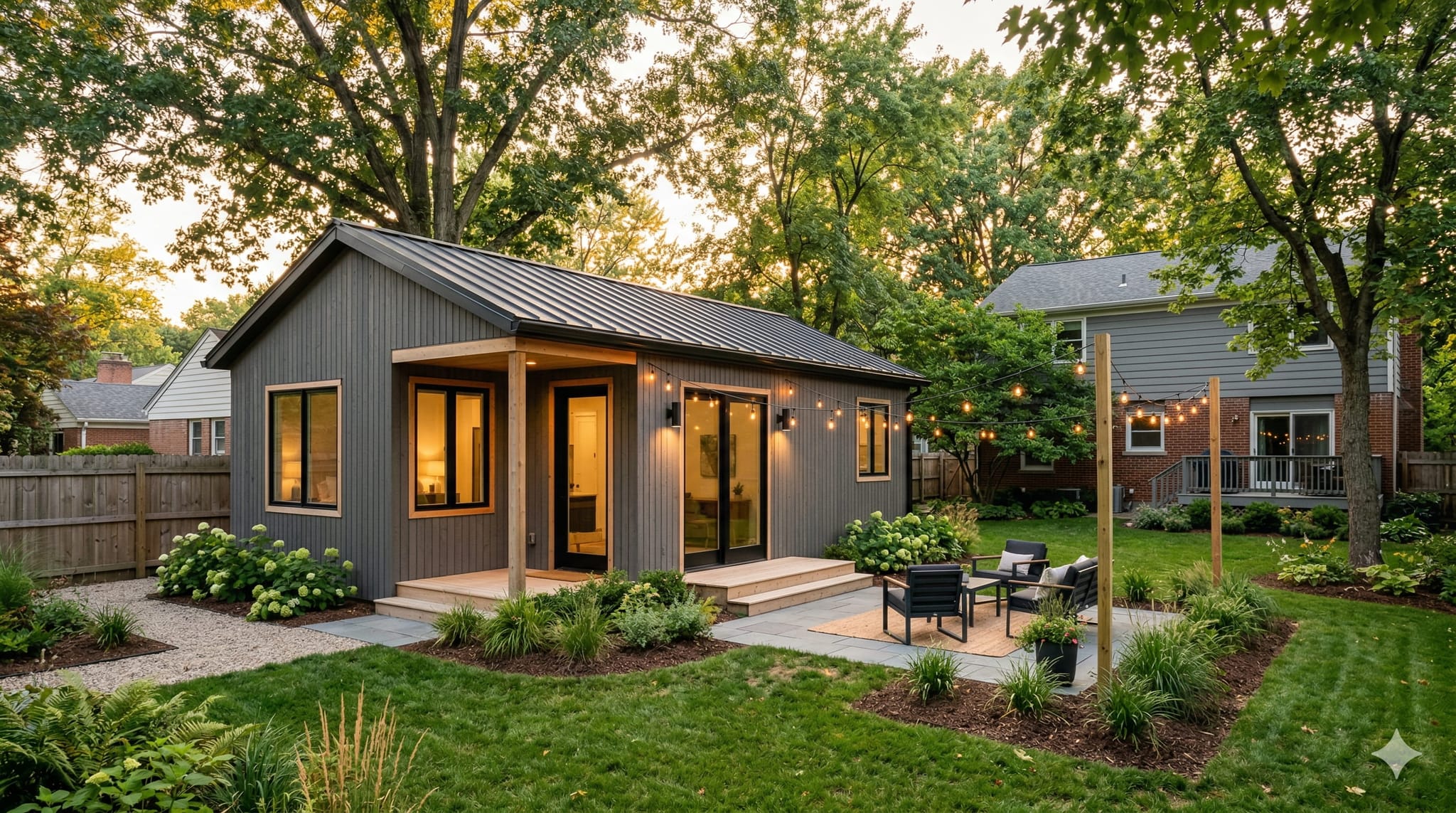
Syracuse is one of the more tiny-home-friendly cities in upstate New York. The city explicitly authorizes tiny homes as accessory dwelling units in residential zones, permitting both attached and detached configurations. One ADU per property is allowed on lots with a single-family home. Detached ADUs must be placed in the side or rear yard, are limited to one bedroom, and must be set back at least 10 feet from property lines. Syracuse caps ADU size at roughly 40% of the primary home's footprint, which naturally favors compact tiny homes.
Foundation-built tiny homes must comply with the NYS Residential Code, including IRC Appendix Q for homes under 400 sq ft. Owner occupancy of either the primary dwelling or the ADU is required. Syracuse's ADU framework has already facilitated over 50 new units in recent years, and the nonprofit Tiny Homes for Good operates a 16-unit transitional supportive-housing village in the city. THOWs are classified as recreational vehicles and are not permitted as permanent residences on residentially zoned land within city limits.
Verify current requirements with your local planning department before purchasing land or beginning construction.
Verify current requirements with your local planning department.
Syracuse permits one accessory dwelling unit per property on lots with a single-family home. Both attached and detached ADUs are allowed. Detached units must be located in the side or rear yard, are limited to one bedroom, must be set back at least 10 feet from property lines, and are capped at roughly 40% of the primary home's size. Owner occupancy of either the primary residence or the ADU is required. Eligible Syracuse homeowners can apply for NYS Plus One ADU grants up to $125,000. The framework has supported 50+ new ADUs and is one of the most explicitly tiny-home-oriented ADU ordinances in upstate New York.
Communities, RV parks, and parking options in and near Syracuse.
THOWs cannot be used as full-time residences on residentially zoned lots in Syracuse — they are RVs under NYS law. Seasonal RV park placement is available at several Onondaga and Madison county campgrounds, with 180-day stay limits standard. Rural Onondaga County and neighboring Madison, Oswego, and Cayuga counties tend to be more lenient for private-land THOW placement in agricultural and agricultural-residential zones. Expect $400–$700/month for seasonal RV park placement in the greater Syracuse area. Year-round options are limited due to Central New York winters, which regularly include significant lake-effect snow. Always confirm stay limits, winterization, and utility hookups with the specific park and the local code enforcement office.
supportive housing village
Syracuse
Nonprofit-run 16-unit transitional tiny home community providing supportive housing for individuals experiencing homelessness. Nationally recognized Syracuse model.
Woodgate, New York
Family-operated Adirondacks builder active since 1991, specializing in custom tiny homes on wheels, skids, or foundations. Workshop capacity of up to 8 builds at a time. Known for cold-climate construction and Old World craftsmanship without subcontracting.
Service areas: New York, Northeast
Fitzwilliam, New Hampshire
New England-based NOAH-certified tiny home builder delivering across NY and New England. Builds both THOW and foundation models with rigorous structural, energy efficiency, and legal compliance standards. NOAH certification simplifies financing and insurance for buyers. Custom homes available alongside in-stock models.
Service areas: New York, New Hampshire, Vermont, Massachusetts, Maine, Rhode Island, Connecticut
Portland, Maine
Portland, Maine design-build firm launched in 2013 by Kaplan Thompson Architects, offering net-zero-ready prefab and modular homes. Four purpose-built ADU designs (Torrey, Highland, Sterling, and Jordan) start around 420 sq ft and suit backyard placements. Typical turnkey cost runs $450–$600 per sq ft. Serves all of New England, the Mid-Atlantic, and as far west as Ohio through manufacturing partners in Maine, New Hampshire, and Pennsylvania.
Service areas: Maine, New Hampshire, Vermont, Massachusetts, Connecticut, Rhode Island, New York, New Jersey, Pennsylvania, Ohio
Damascus, Oregon
Oregon-based pre-engineered building kit manufacturer offering prefab cabin kits (including the 495 sq ft Mazama model) and backyard ADU kits shipped nationwide. Founded in 2002 alongside sister company DC Builders; maintains Delaware-specific design and pricing resources for cabin and ADU projects.
Service areas: Delaware, Maryland, Virginia, Pennsylvania, New Jersey, New York, Oregon
Valatie, New York
Family-owned Capital Region builder in Valatie, NY (south of Albany) with over 75 years of combined construction experience. Builds custom tiny homes on wheels and DIY-friendly kits. Provides NYS DMV registration and plates. Standard builds feature Roxul insulation (R-15 walls/floor, R-23 roof), knotty pine interior, cedar siding, and galvalume roofing.
Service areas: New York, Northeast
Cherry Creek, New York
Experienced tiny home builder in Chautauqua County, western New York, building custom tiny homes for both homeowners and real estate investors. Models range from the Hideaway (from $58,000) to The Cottage ($96,000–$106,500). Builds for both personal use and short-term rental investment.
Service areas: New York, Northeast
A comparison between tiny-home living and conventional homeownership in Syracuse.
Tiny home path
Traditional home path
Potential monthly savings
950
Source: Redfin, Zillow, and FRED data, April 2026
Verified links for planning, permitting, and community connections in Syracuse.
Yes. Syracuse explicitly permits tiny homes as accessory dwelling units in residential zones. One ADU per property is allowed on lots with a single-family home. Detached ADUs must sit in the side or rear yard, are limited to one bedroom, must be set back at least 10 feet from property lines, and are capped at roughly 40% of the primary home's size.
Yes. Detached ADUs are explicitly permitted. They must be located in the side or rear yard, maintain a minimum 10-foot setback from property lines, and stay under the size cap (roughly 40% of the primary home). Foundation-built tiny homes under 400 sq ft follow IRC Appendix Q for compact stairs, loft headroom, and egress.
As of April 2026, expect $50,000–$140,000 for a builder-constructed tiny home or ADU in Syracuse. Local land costs are among the lowest of any New York metro, which makes ground-up detached cottages economically attractive. The NYS Plus One ADU Program offers grants up to $125,000 to eligible owner-occupants.
Tiny Homes for Good is a Syracuse-based nonprofit that operates a 16-unit transitional supportive housing village of small individual homes for formerly homeless residents. It is one of the most cited examples of tiny-home-based supportive housing in the Northeast and is a major reason Syracuse has been so forward on tiny home policy.
Not as a full-time residence on residentially zoned land. THOWs are RVs under NYS law and Syracuse requires dwellings to be on foundations for permanent residential use. Seasonal RV park placement is available in Onondaga and Madison counties with 180-day annual stay limits. Rural towns in surrounding counties tend to be more flexible for private-land THOW placement.
Guides, zoning explainers, and financing articles related to this state.
Everything you need to know about living in a tiny home in California — legal pathways, best cities, costs by region, builders, financing, insurance, and off-grid options. Updated for 2026 laws.
A state-by-state breakdown of tiny home zoning laws, THOW regulations, ADU rules, and where tiny homes are easiest to place legally in 2026.
A state-by-state overview of tiny home zoning laws, covering the most friendly and most restrictive states for THOW and foundation tiny home placement.