city program
NYC ADU For You Program
Citywide
Municipal initiative launched in 2026 offering pre-approved ADU designs and streamlined permitting for homeowners adding 800 sq ft ancillary dwelling units.
Tiny homes in New York City, New York — zoning rules, THOW parking, builder costs, and what you need to know before buying.
Last researched April 2026
New York City offers a paradox for tiny-home living: it is simultaneously the hardest place in the state to park a THOW and, since December 2024, one of the most exciting new markets for small foundation-built ADUs. Homeowners in Brooklyn, Queens, Staten Island, and the Bronx with one- or two-family lots can now legally add backyard cottages, garage conversions, or basement apartments up to 800 sq ft. Rental demand is among the strongest in the country, which pushes build economics in favor of investor-grade ADUs. For THOW enthusiasts, the practical strategy is to own a foundation ADU in the five boroughs and place a THOW upstate.
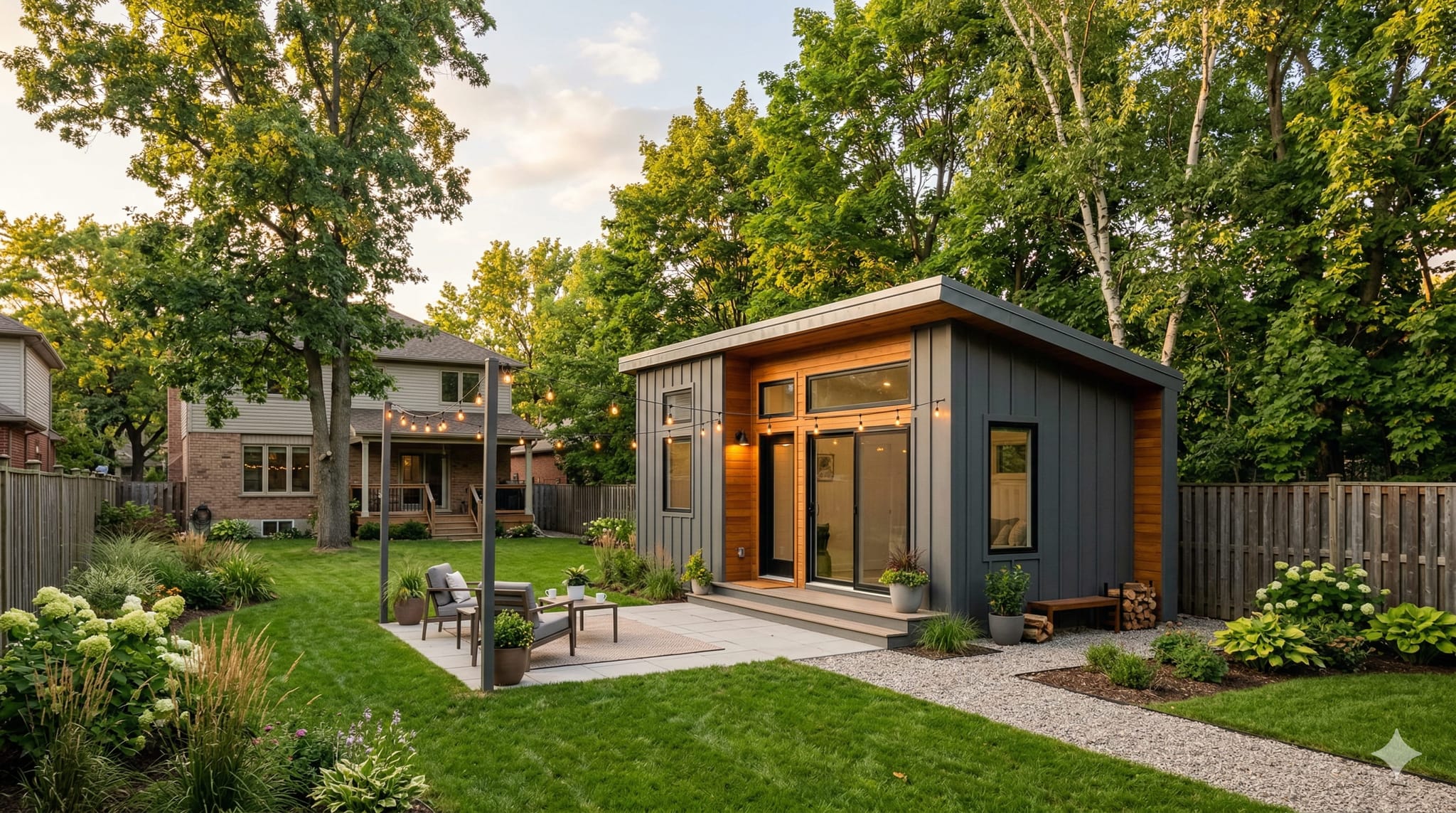
New York City's zoning landscape was transformed in December 2024 with the passage of Local Laws 126 and 127 — the City of Yes for Housing Opportunity reform. For the first time, Ancillary Dwelling Units (ADUs) up to 800 square feet are legal citywide on lots with one- or two-family homes. Permitted types include backyard cottages, garage conversions, and basement or cellar apartments. The reform is projected to enable roughly 20,000 new ADUs over 15 years. As of early 2026, NYC has launched the ADU For You platform, which includes a Pre-Approved Plan Library (PAPL) to streamline permitting.
Tiny homes on wheels (THOWs) remain classified as recreational vehicles under NYS law and are not permitted as full-time residences within NYC limits. The five boroughs maintain their own NYC Building Code (separate from NYS Residential Code and IRC Appendix Q), so foundation-built tiny homes must comply with city-specific construction standards. ADUs must be in owner-occupied properties, and are prohibited in high-risk flood zones, historic districts, and certain low-density zones (R1A, R2A, R3A) outside the greater transit zone.
Verify current requirements with your local planning department before purchasing land or beginning construction.
Verify current requirements with your local planning department.
As of December 2024, NYC formally legalized ADUs up to 800 sq ft on lots with one- or two-family homes, under Local Laws 126 (a 10-year pilot to legalize existing basement/cellar apartments) and 127 (citywide zoning and safety framework). Allowed ADU types include detached backyard cottages, garage conversions, attached additions, and basement or cellar apartments. Requirements include two means of egress, water sensors in basement units, flood-zone restrictions, and mandatory owner occupancy. The NYC ADU For You program, launched in 2025–2026, accepts applications and offers pre-approved ADU designs through the Pre-Approved Plan Library. Eligible NYC homeowners can access Plus One ADU Program grants up to $175,000 through NYS Homes and Community Renewal. ADUs are not allowed in certain low-density zones (R1A, R2A, R3A) outside the transit zone, nor in designated historic districts or high-risk flood zones.
Communities, RV parks, and parking options in and near New York City.
Tiny homes on wheels are effectively not permitted for full-time residential use inside New York City limits. THOWs are classified as recreational vehicles by the NYS DMV, and RV parking in residential districts is prohibited. A small number of industrial-zone RV facilities in Staten Island and the outer boroughs accept seasonal residents, but year-round THOW living is extremely rare and typically not legal. Most tiny-home-curious New Yorkers either pursue a foundation-built ADU under the new City of Yes rules, or place a THOW on land in the Hudson Valley or Catskills within commuting distance. Expect monthly costs of $900–$1,500+ for any form of THOW storage or site rental within city limits, with availability extremely limited. Always confirm zoning and fire code compliance with the NYC Department of Buildings before attempting any long-term placement.
city program
Citywide
Municipal initiative launched in 2026 offering pre-approved ADU designs and streamlined permitting for homeowners adding 800 sq ft ancillary dwelling units.
Woodgate, New York
Family-operated Adirondacks builder active since 1991, specializing in custom tiny homes on wheels, skids, or foundations. Workshop capacity of up to 8 builds at a time. Known for cold-climate construction and Old World craftsmanship without subcontracting.
Service areas: New York, Northeast
Fitzwilliam, New Hampshire
New England-based NOAH-certified tiny home builder delivering across NY and New England. Builds both THOW and foundation models with rigorous structural, energy efficiency, and legal compliance standards. NOAH certification simplifies financing and insurance for buyers. Custom homes available alongside in-stock models.
Service areas: New York, New Hampshire, Vermont, Massachusetts, Maine, Rhode Island, Connecticut
Portland, Maine
Portland, Maine design-build firm launched in 2013 by Kaplan Thompson Architects, offering net-zero-ready prefab and modular homes. Four purpose-built ADU designs (Torrey, Highland, Sterling, and Jordan) start around 420 sq ft and suit backyard placements. Typical turnkey cost runs $450–$600 per sq ft. Serves all of New England, the Mid-Atlantic, and as far west as Ohio through manufacturing partners in Maine, New Hampshire, and Pennsylvania.
Service areas: Maine, New Hampshire, Vermont, Massachusetts, Connecticut, Rhode Island, New York, New Jersey, Pennsylvania, Ohio
Damascus, Oregon
Oregon-based pre-engineered building kit manufacturer offering prefab cabin kits (including the 495 sq ft Mazama model) and backyard ADU kits shipped nationwide. Founded in 2002 alongside sister company DC Builders; maintains Delaware-specific design and pricing resources for cabin and ADU projects.
Service areas: Delaware, Maryland, Virginia, Pennsylvania, New Jersey, New York, Oregon
Valatie, New York
Family-owned Capital Region builder in Valatie, NY (south of Albany) with over 75 years of combined construction experience. Builds custom tiny homes on wheels and DIY-friendly kits. Provides NYS DMV registration and plates. Standard builds feature Roxul insulation (R-15 walls/floor, R-23 roof), knotty pine interior, cedar siding, and galvalume roofing.
Service areas: New York, Northeast
Cherry Creek, New York
Experienced tiny home builder in Chautauqua County, western New York, building custom tiny homes for both homeowners and real estate investors. Models range from the Hideaway (from $58,000) to The Cottage ($96,000–$106,500). Builds for both personal use and short-term rental investment.
Service areas: New York, Northeast
A comparison between tiny-home living and conventional homeownership in New York City.
Tiny home path
Traditional home path
Potential monthly savings
3000
Source: Realtor.com and NYC HPD data, April 2026
Verified links for planning, permitting, and community connections in New York City.
Not as a full-time residence. THOWs are classified as RVs in New York State, and NYC does not permit RV full-time occupancy in residential districts. Industrial-zone facilities in Staten Island and the outer boroughs occasionally accept seasonal stays, but year-round THOW living inside city limits is effectively off the table. Most NYC tiny-home buyers build a foundation ADU under the City of Yes rules, or park a THOW on land in the Hudson Valley or Catskills.
Local Laws 126 and 127 (adopted December 2024) legalize Ancillary Dwelling Units up to 800 sq ft on lots with one- or two-family homes citywide. Allowed types include detached backyard cottages, garage conversions, attached in-law suites, and basement or cellar apartments. The property owner must live in either the primary home or the ADU, and ADUs are restricted in flood zones, historic districts, and certain low-density zones (R1A, R2A, R3A) outside the transit zone.
As of April 2026, NYC ADU construction costs typically run $95,000 to $275,000+ depending on type, size, and finish level. Basement conversions are usually the cheapest path, followed by garage conversions; ground-up backyard cottages are the most expensive. The Plus One ADU Program offers grants up to $175,000 for eligible owner-occupants earning up to 100% of Area Median Income. The ADU For You pre-approved plan library can reduce soft costs.
Yes. Any ADU in NYC requires NYC Department of Buildings review, and most projects require a licensed architect or engineer. The Pre-Approved Plan Library (PAPL) launched in 2026 allows homeowners to select pre-reviewed designs, significantly cutting review time and soft costs. Fire safety, two means of egress, water sensors in basement units, and flood-zone compliance are all required under Local Law 127.
Queens, Staten Island, and the outer sections of Brooklyn and the Bronx have the highest concentration of one- and two-family homes on lots that can physically accommodate a backyard cottage or garage conversion. Manhattan has almost no qualifying parcels. Check your zoning district using ZoLa (NYC's zoning and land use map) before planning — R1A, R2A, and R3A zones outside the transit zone are excluded from the ADU rules.
Guides, zoning explainers, and financing articles related to this state.
Everything you need to know about living in a tiny home in California — legal pathways, best cities, costs by region, builders, financing, insurance, and off-grid options. Updated for 2026 laws.
A state-by-state breakdown of tiny home zoning laws, THOW regulations, ADU rules, and where tiny homes are easiest to place legally in 2026.
A state-by-state overview of tiny home zoning laws, covering the most friendly and most restrictive states for THOW and foundation tiny home placement.