Moderate

Tiny Homes in Boston, Massachusetts

Tiny homes in Boston, Massachusetts — zoning rules, THOW parking, builder costs, and what you need to know before buying.

Last researched April 2026

$250,000 – $450,000
Builder cost range
1
Builders serving area
675,647
Population
Moderate
Tiny-home friendliness

Why Boston

Boston is the most expensive tiny home market in Massachusetts and among the priciest in the country. High land costs, complex permitting through ISD, and construction pricing in the $300–$400 per sq ft range make foundation ADUs a significant investment — typical Boston ADUs run $250,000–$450,000+. The upside is strong rental demand, a robust labor market, and easy access to public transit, which waives ADU parking requirements for most inner-neighborhood lots. THOW living is not a realistic option within the city; Boston tiny home buyers who want a mobile footprint typically park in Middleborough, Carver, or the South Shore and commute.

Tiny home living in Boston, Massachusetts

Zoning & Placement

Boston is its own zoning jurisdiction and the statewide Affordable Homes Act ADU provisions do not apply automatically — the city administers its own ADU rules through the Boston Zoning Code. As of April 2026, Boston allows ADUs citywide with detached, attached, and internal configurations permitted on most single- and two-family lots; ADUs must generally be at least 350 sq ft and no more than 900 sq ft or 50% of the primary dwelling, whichever is less. A building permit, plumbing permit, electrical permit, and Certificate of Occupancy are required from the Inspectional Services Department (ISD). One off-street parking space is required for each ADU, waived if the property is within a half-mile of an MBTA rapid-transit or commuter rail station. THOWs are regulated as recreational vehicles and cannot serve as a primary residence on standard Boston residential lots. Tiny homes of 400 sq ft or less built on permanent foundations may use the Appendix AQ code pathway from the 10th Edition of 780 CMR. Verify current requirements with your local planning department before purchasing land or beginning construction.

Verify current requirements with your local planning department.

What to verify locally

  • Confirm whether your tiny home will be treated as an ADU, a site-built dwelling, or a recreational vehicle.
  • Ask about utility hookup requirements, especially sewer, electrical service, and emergency-access setbacks.
  • Check whether long-term occupancy is allowed on the lot type you are considering.
  • Verify minimum square footage requirements for your zone classification.

ADU & Backyard Tiny Homes

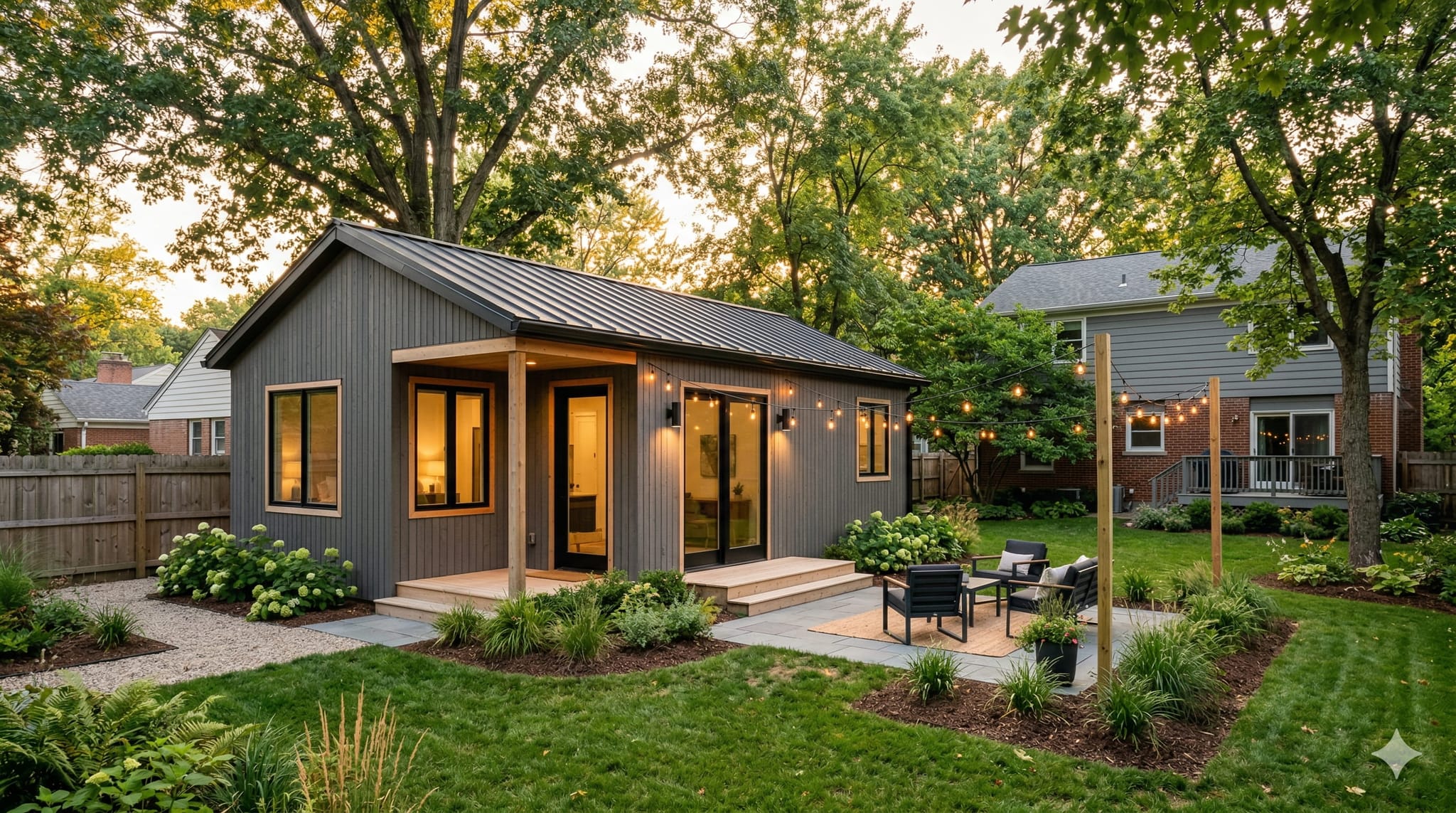
Boston allows ADUs by local ordinance independent of the state law. ADU size is capped at 900 sq ft or 50% of the primary dwelling (whichever is less), with a 350 sq ft minimum per state health code. Detached, attached, and internal ADUs are permitted on most single- and two-family lots. One off-street parking space per ADU is required unless the lot sits within 0.5 miles of an MBTA rapid-transit or commuter rail station. Short-term rentals (under 31 days) of ADUs are prohibited. Permits are issued through the Inspectional Services Department; Boston Planning Department design review may apply in certain neighborhoods.

Where to Park

Communities, RV parks, and parking options in and near Boston.

Full-time THOW living is not permitted on standard Boston residential lots. Massachusetts classifies THOWs as recreational vehicles and the city does not recognize them as primary dwellings. There are no year-round RV parks within Boston proper; the closest extended-stay options are in Middleborough (Boston/Cape Cod KOA, roughly 40 miles south) and Carver (South Meadow Village 55+ manufactured home cooperative). Travel trailers and RVs may be stored on private property subject to Boston zoning but cannot be occupied as dwellings. Street parking of RVs is restricted and overnight occupancy is prohibited.

Builders Serving Massachusetts

Browse all builders

Beechwood Tiny Homes

Keene, New Hampshire

New England-based NOAH-certified tiny home builder delivering across NY and New England. Builds both THOW and foundation models with rigorous structural, energy efficiency, and legal compliance standards. NOAH certification simplifies financing and insurance for buyers. Custom homes available alongside in-stock models.

THOW Foundation builds NOAH certified Custom builds

Service areas: New York, New Hampshire, Vermont, Massachusetts, Maine, Rhode Island, Connecticut

Costs

A comparison between tiny-home living and conventional homeownership in Boston.

Tiny home path

Builder cost range $250,000 – $450,000
Estimated monthly total

Traditional home path

Median home price $868,000
Estimated monthly total

Potential monthly savings

Resources

Verified links for planning, permitting, and community connections in Boston.

Common Questions

Does the Massachusetts statewide ADU law apply in Boston?

Not directly. Boston is its own zoning jurisdiction and administers ADUs through the Boston Zoning Code rather than 760 CMR. As of April 2026, Boston has adopted its own by-right ADU framework that mirrors the statewide 900 sq ft / 50% cap, but permitting, design review, and parking details follow local Boston rules.

Can I park a tiny house on wheels in Boston?

Not as a primary residence. Boston treats THOWs as recreational vehicles, and RVs are not permitted as dwellings on residential lots. There are no full-time RV parks within the city. The nearest long-term options are Boston/Cape Cod KOA in Middleborough and South Meadow Village in Carver.

How much does it cost to build an ADU in Boston?

Expect $250,000 to $450,000+ for a foundation ADU built to code. Boston construction runs $300–$400 per sq ft, and permitting delays of 6–12 months are common. Internal conversions of existing basements or attics can come in lower, starting around $150,000.

Do I need a parking space for a Boston ADU?

Generally yes — one off-street space per ADU, unless the property is within a half-mile of an MBTA rapid-transit or commuter rail station, which waives the requirement. This exemption covers most inner-Boston neighborhoods.

Guides for Massachusetts Buyers

Guides, zoning explainers, and financing articles related to this state.

View all guides
Share

More Cities in Massachusetts